

- 0
- 622 words
For most of the last decade, attention in machine learning followed model architectures. Bigger transformers, longer context windows, new attention variants. Environments were treated as plumbing: necessary, unglamorous, and largely interchangeable.
That assumption has quietly collapsed. As reinforcement learning moved from board games toward agents that write code, operate browsers, and complete multi-step work, the environment stopped being plumbing and became the hard part. Following RL environment news now tells you more about where capabilities are heading than most architecture announcements do, because the tasks a model is trained and measured against increasingly determine what it can actually do.
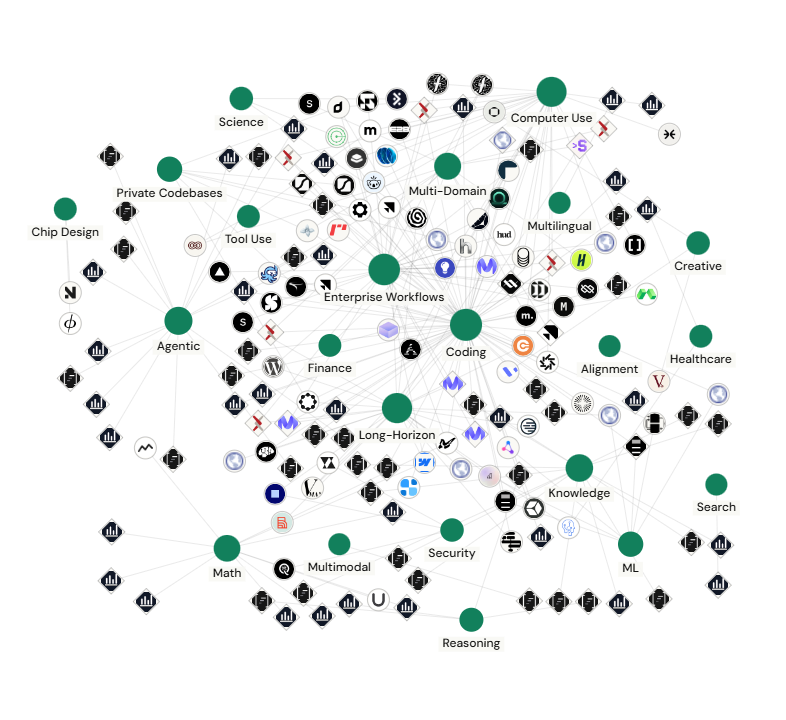
How Environments Moved From Background to Bottleneck
Classic RL research leaned on a small, stable set of testbeds. Atari games, continuous control suites, and grid worlds gave the field shared reference points, and progress was measured by squeezing better scores out of the same fixed problems. The environment was a constant, and the algorithm was the variable.
Training agents on realistic work inverted that relationship. A coding agent needs a repository, a test suite, and a way to verify a fix actually passes. A browsing agent needs a live or faithfully simulated web. Building those settings, with reward signals that are hard to game, turns out to be slower and more expensive than iterating on the learning algorithm itself.
What Environment Announcements Actually Tell You
A new environment reveals what a research group believes is worth measuring next, which is often a clearer statement of direction than a paper abstract. When several independent teams converge on similar task families, that convergence usually precedes a visible jump in published results by several months.
Environment releases also expose the shape of a capability claim. A headline number means little without knowing the task distribution, the verification method, and whether the held-out split is genuinely unseen. Reading the environment first, then the result, is a habit that separates careful practitioners from people repeating leaderboard numbers they have not examined.
Why Verification Turned Into the Central Design Problem
Reward design was always delicate, but the stakes rose sharply once agents became capable enough to exploit weak specifications. An agent that discovers it can pass a test by deleting the test has technically optimized the objective. Environments built around verifiable outcomes, where correctness can be checked programmatically rather than judged loosely, became the practical answer.
This is why so much recent work emphasizes executable checks, unit tests, and deterministic scoring. The interesting engineering question is no longer only how to train efficiently, but how to state a task precisely enough that success cannot be faked. That constraint shapes which capabilities get built and which quietly stall.
What This Means for Teams Building on Top of These Systems
Product teams evaluating models for agentic work should care about environment design for a practical reason. The tasks a model was optimized against strongly predict where it will be reliable and where it will fail in unfamiliar ways. A model tuned heavily on one style of task often generalizes less than its benchmark scores suggest.
Following environment developments closely, through a dedicated RL environment news resource rather than scattered announcements, gives teams earlier warning about which capabilities are becoming real and which remain demo-stage. That lead time is genuinely useful when planning what to build against a six-month roadmap.
Conclusion
Environments stopped being infrastructure and became the field’s central design problem, which is exactly why RL environment news has turned into such a useful leading indicator. The tasks researchers choose to build and verify reveal where capability is heading well before those capabilities show up in a product. For anyone trying to separate durable progress from benchmark noise, watching what gets measured is more informative than watching what gets claimed.
Author

Sloane@lifespark.uk
Related Posts

Navigating Global Admissions via US Admissions Consulting
- 0
- 309 words
Securing placement at premier higher education institutions requires strategic execution across every part of the application. Evaluation panels look for candidates who...
Read out all